Back to Rome Attractions
Do You Need to Book Galleria Doria Pamphilj Tickets in Advance?
Updated August 2026
Hidden behind the unassuming facade of Palazzo Doria Pamphilj on Via del Corso, one of Rome's busiest shopping streets, lies what many art lovers consider the finest private art collection in Italy. The Galleria Doria Pamphilj has been accumulating masterpieces since the mid-17th century, and its holdings today include works by Velázquez, Caravaggio, Raphael, Titian, Bernini, Brueghel, and Claude Lorrain, displayed in rooms that have barely changed in over 250 years. Unlike the great state museums of Rome, this is still a private family home. The Doria Pamphilj family continues to live in parts of the palace, and the audio guide is narrated by a family member. Knowing what to expect before you arrive will help you get the most out of one of Rome's most special and least crowded cultural experiences.
At a Glance
How Early to Book:
Book 2-3 days in advance for quick entry, however, walk-up tickets are almost always available at the on-site ticket office.
Best Times to Visit:
Weekday mornings between 9am and noon are consistently the quietest periods of the week.
Ticket price:
€17 for adults when booked online, €16 when purchased at the on-site ticket office.
Where to Book:
Museum Address:
Do You Need to Book Galleria Doria Pamphilj Tickets in Advance?
Advance booking is recommended a few days before a visit, especially during the high and shoulder seasons. The Galleria Doria Pamphilj operates a timed-entry system, and access is not guaranteed without a reservation.
What is included: The standard ticket covers access to the full gallery, the private apartments of the palace, and an audio guide in your choice of English, Italian, French, or Spanish. The audio guide is included in the price and does not require any additional booking.
Where to book: Tickets should be purchased directly through the official Galleria Doria Pamphilj booking page. This is the only authorised online booking channel.
Cancellation policy: Purchased tickets cannot be refunded under any circumstances, and changes or cancellations to issued tickets are not permitted. Plan your visit carefully before booking.
Is the Galleria Doria Pamphilj included in the Roma Pass? No. Because the gallery is privately managed rather than part of the state museum circuit, the Roma Pass does not cover entry here. Some third-party combined packages are available that bundle the gallery with other nearby attractions, but these are not official Roma Pass inclusions.
How far in advance to book: In peak season (April through October), and particularly on weekends, booking a few days in advance is advisable. The gallery has a limited visitor capacity per time slot, and popular morning slots on Fridays, Saturdays, and Sundays can fill quickly. In the low season, booking the day before or purchase tickets at the on-site ticket office.
Galleria Doria Pamphilj Opening Hours and Entry Information
Monday, Tuesday, and Thursday: 9:00am to 7:00pm (last entry 6:00pm)
Friday, Saturday, and Sunday: 10:00am to 8:00pm (last entry 7:00pm)
Closed every Wednesday
Closed on 1 January, Easter Sunday, and 25 December
The ticket office is open from the time the museum opens until one hour before closing. Visitors who have booked online may go directly to the gallery entrance on the first floor of the palace, bypassing the ticket office.
Please note: There is no cloakroom service at the gallery, and there is no lift. Both of these are worth bearing in mind when planning your visit, particularly if you have large bags or mobility considerations.
Address: Via del Corso 305, 00186 Roma. The entrance to the gallery is on Via del Corso, a short distance from Piazza Venezia.
What is the Best Way to Get to Galleria Doria Pamphilj?
The gallery sits at the southern end of Via del Corso in the heart of Rome's historic centre, close to Piazza Venezia and within comfortable walking distance of most of the city's major sights.
On foot: The most pleasant approach for most visitors is on foot from the Pantheon. From the Pantheon, follow Via della Minerva and then Via del Piè di Marmo northeast for about five to seven minutes and you will arrive at the palace. From Campo de' Fiori, allow around 10 minutes. From the Trevi Fountain, the walk takes around 15 minutes via Via del Corso.
By bus: Via del Corso and Piazza Venezia are served by several bus routes including 40, 64, and 492. These connect the area to Termini station, the Vatican, and Trastevere. Bus routes 40 and 64 in particular are useful if you are coming from the Vatican side or from Largo di Torre Argentina.
By Metro: There is no Metro station particularly close to the gallery. The nearest are Spagna (Line A) and Colosseo (Line B), each requiring a 15 to 20-minute walk. The bus or arriving on foot from other sights in the historic centre is more practical for most visitors.
The Palazzo Doria Pamphilj is situated within Rome's ZTL (Zona a Traffico Limitato). Driving to the gallery is not recommended, as private vehicles are restricted and fines for non-resident drivers are automatic.
How Much Time Should I Spend at Galleria Doria Pamphilj?
I'd recommend spending about 90 minutes to two hours at the gallery at a comfortable, unhurried pace. This allows time to move through the four wings of the main gallery, the two large adjoining halls, and the private apartments, while using the audio guide to explore the highlights.
Art lovers who want to spend time in front of the key works, or who use the full audio guide, should allow closer to two hours. The gallery does not rush visitors out once they are inside; there is no time limit on your stay after admission.
The visit is self-guided, and the audio guide is designed to lead you through the collection at your own pace. Time slots are assigned at 30-minute intervals for entry management, but once you are inside the experience is entirely your own.
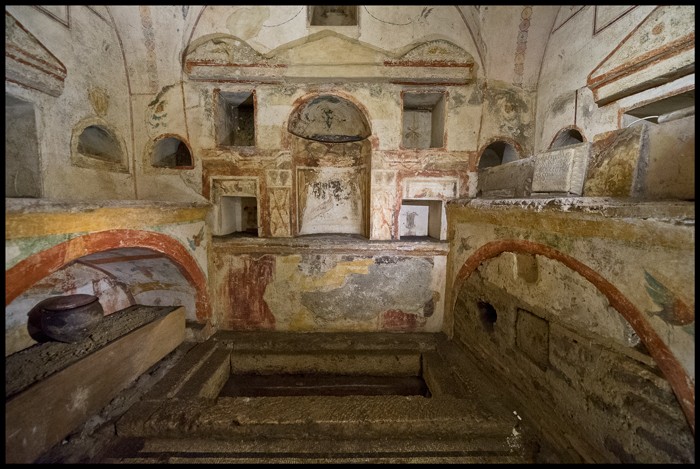
Image Credit: Wombatjpw, CC BY-SA 4.0
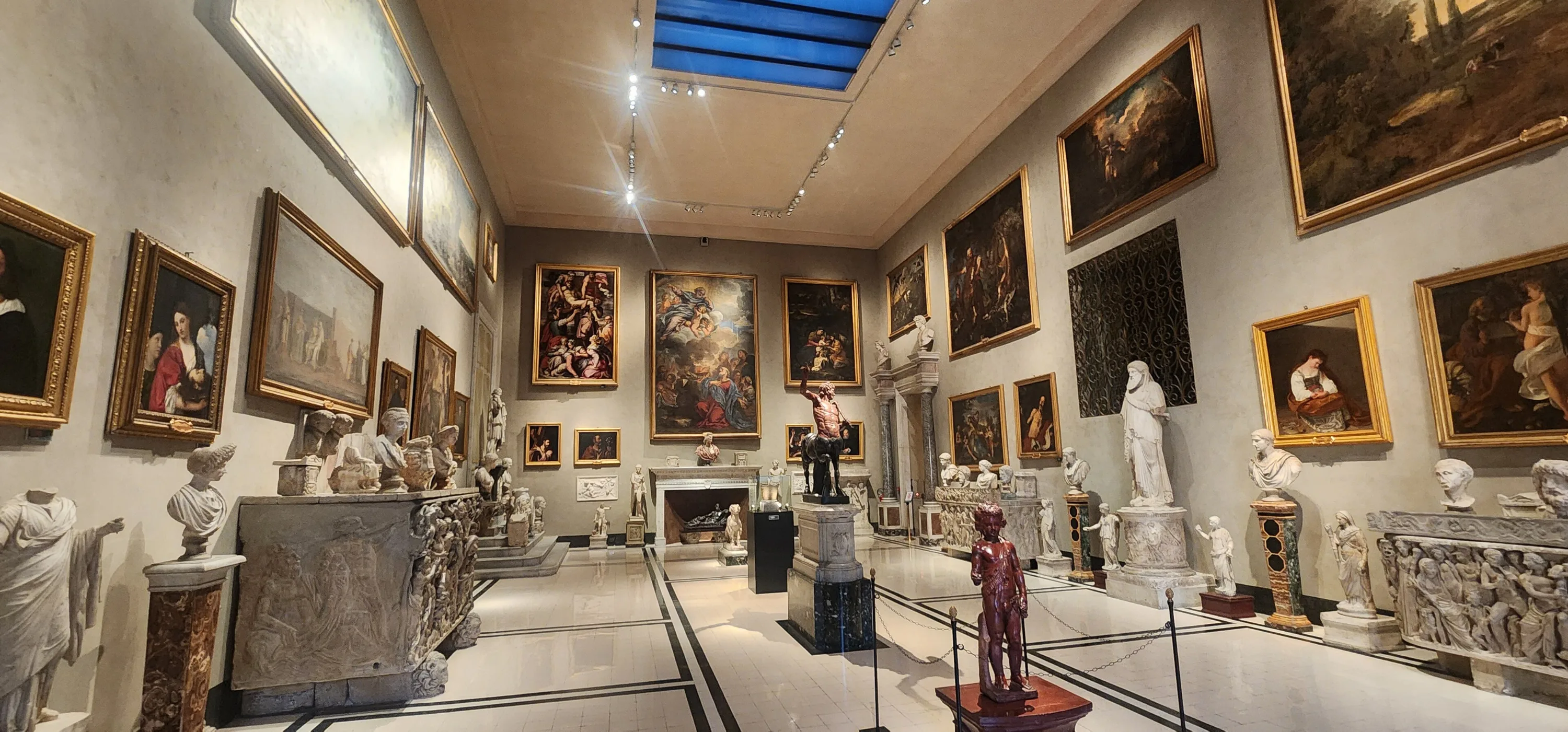
The palace and gallery remain privately owned by the Doria Pamphilj family, descending through families like the Aldobrandini. The family still lives in a part of the palace today.
What is the Best Time to Visit Galleria Doria Pamphilj?
Best time of day: Weekday mornings between 9:00am and noon on Monday, Tuesday, or Thursday are consistently the quietest periods. The gallery is one of the calmer major art venues in Rome at any time, but early weekday visits allow you to experience the collection with the closest thing Rome has to solitude in an art gallery.
Best days: Monday, Tuesday, and Thursday are markedly quieter than the Friday-to-Sunday window. If your schedule allows a weekday visit, take it.
Weekends: Friday, Saturday, and Sunday see higher visitor numbers, particularly during spring and summer. These days also have extended opening hours (to 8:00pm), making a late afternoon visit from around 5:00pm a good option if weekday visits are not possible.
The gallery is closed every Wednesday. This is the most common day that visitors show up and find the doors shut. Double-check your visiting day before heading to Via del Corso.
Season: The Galleria Doria Pamphilj is considerably less affected by peak-season tourist surges than Rome's major state museums. It is relatively calm even during July and August compared to the queues at the Colosseum or the Vatican. That said, booking remains necessary year-round.
What is Inside Galleria Doria Pamphilj?
The collection was assembled over more than 200 years by successive generations of the Doria Pamphilj family. It contains over 650 works spanning the 15th to the 18th century, displayed in a "Petersburg Hanging" arrangement, with paintings stacked in rows from floor to ceiling in the manner of a 17th-century aristocratic residence. The current arrangement follows a manuscript from the family's historical archives dated 1767, meaning the collection has been displayed in essentially the same configuration for over 250 years.
The Hall of Mirrors (Galleria degli Specchi): The architectural centrepiece of the palace, this corridor runs along the Via del Corso facade and alternates gold-framed Venetian mirrors with ancient archaeological sculptures, all beneath a frescoed ceiling depicting the Labours of Hercules. Designed by Gabriele Valvassori around 1730, it is widely described as a "wow" moment, and rightly so. The hall is long, luminous, and extraordinary in scale and decoration, and unlike its namesake at Versailles it is rarely crowded.
Velázquez's Portrait of Pope Innocent X: The single most famous work in the collection has its own dedicated room and has been kept there since the 19th century, when the family decided the painting was too important to share wall space with anything else. Painted by Diego Velázquez in 1650 during his second trip to Rome, it is widely considered one of the greatest portraits in Western art. The Pope reportedly looked at the finished canvas and said "too true," acknowledging the uncomfortable honesty of the likeness. Velázquez captured not just the features of Pope Innocent X Pamphilj but his psychological complexity: the suspicion, the authority, and the vulnerability beneath the official face of power. The painting later obsessed the British painter Francis Bacon, who produced a series of anguished "Screaming Pope" variations based on it throughout the 1950s and 1960s. Standing in front of the original in a room of this size, without crowds, is one of the more memorable experiences Rome's art scene can offer.
The Caravaggio works: Three paintings by Caravaggio are displayed in the Second Room of the main gallery, shown alongside works by Titian and Raphael. The two most significant are the Penitent Magdalene and the Rest on the Flight into Egypt, both painted in the mid-1590s when Caravaggio was still in his early twenties. The Magdalene shows a solitary young woman, head bowed in grief, in a scene that reads as much as a study of personal sorrow as a religious subject. The Rest on the Flight into Egypt is the more lyrical of the two: the Holy Family pauses in a landscape at sunset, and an angel plays the violin for the sleeping Christ child, with Joseph holding the sheet music open. A third Caravaggio, St John the Baptist, shows the saint as a young man in a typically direct and unsentimental pose. Together, these three paintings show the young artist at his most varied and his most tender.
Raphael's Double Portrait: Displayed nearby, this small, austere painting of two anonymous men in dark clothing presents an intriguing puzzle: no one knows conclusively who the subjects are, despite more than five centuries of scholarly debate. The restraint and psychological intensity of the composition make it feel more modern than almost anything else in the room.
Titian's Salome with the Head of John the Baptist: Displayed in the same room as the Caravaggios, this is one of the more discomfiting works in the collection, showing the young woman holding the severed head with an expression that has been read as triumph, ambivalence, or something stranger still.
The Private Apartments: Included in the standard ticket, the private apartments of the palace preserve their original furnishings and decoration and offer a rare sense of how the Doria Pamphilj family actually lived. The Throne Room, created not for the family but for visiting popes (who, as guests, became the formal hosts even in someone else's palace), is a particularly striking room. A private chapel is also accessible.
Works by Bernini, Brueghel, and Claude Lorrain: The collection contains marble busts of Pope Innocent X by Gian Lorenzo Bernini, displayed alongside the Velázquez portrait in an instructive contrast: Bernini's stone pope appears heroic and composed; Velázquez's painted pope looks like himself. Jan Brueghel the Elder's Four Elements series are among the finest Flemish works in the collection. The landscapes by Claude Lorrain, the 17th-century French painter who lived most of his life in Rome, are displayed in the smaller rooms leading off the Hall of Mirrors.
The Audio Guide Narrated by a Family Member
The audio guide included with every ticket is one of the most distinctive features of a visit to the Galleria Doria Pamphilj. It is narrated by Prince Jonathan Doria Pamphilj, a member of the family that still owns the palace and has maintained the collection for nearly four centuries.
The narration is not a standard museum commentary. It is personal, anecdotal, and specific to the family's experience of living with these works. Prince Jonathan describes what individual paintings mean to the family, recounts stories about how particular works entered the collection, and offers the kind of contextual knowledge that no external curator could replicate. For the Velázquez portrait in particular, his description of what the painting has meant to successive generations of the family is unusually affecting.
The guide is available in English, Italian, French, and Spanish, and is included in the ticket price. No additional booking or equipment is needed. It is strongly recommended that you use it.

Is Galleria Doria Pamphilj Worth Visiting?
The Galleria Doria Pamphilj is one of the more distinctive experiences available in Rome. The collection itself would justify a visit on its own terms: the Velázquez portrait of Pope Innocent X alone belongs in the company of the greatest paintings in Europe, and the three Caravaggios, the Raphael, and the Titian in a single room would be a standout holding in any major museum in the world.
What makes the gallery exceptional beyond its contents is the way the contents are displayed. This is not a neutral white-walled museum with artworks plucked from their context. It is a lived-in palace where paintings have hung in the same positions for 250 years, in rooms still furnished with the chairs, chandeliers, and tapestries of the 17th and 18th centuries. Visiting is closer to being admitted to someone's house than to touring a public institution.
The relative absence of crowds compared to the Colosseum, the Vatican, or even the Borghese Gallery is another significant factor. You can stand in front of Velázquez's portrait of Pope Innocent X for as long as you like, in near-silence, which is an experience that very few cities in the world can offer with a work of that magnitude.
Where Should I Eat Near Galleria Doria Pamphilj?
A short walk away:
Armando al Pantheon (roughly a 10-minute walk toward the Pantheon via the back streets) remains one of the most reliably excellent traditional Roman trattorias in the historic centre, with Roman classics done properly. Book ahead.
Sant'Eustachio il Caffè on Piazza di Sant'Eustachio is widely considered one of the finest espresso bars in Rome, about a 10-minute walk from the gallery. The beans are roasted on-site and the coffee is prepared with a technique that has been unchanged for decades.
Enoteca Corsi on Via del Gesù, about 10 minutes on foot, is a simple, honest wine bar and trattoria with a good-value set lunch, beloved by local office workers and a reliable option for a no-fuss midday meal.
The streets between Via del Corso and the Pantheon, including Via di Santa Maria in Via and Via del Piè di Marmo, contain a number of trattorias and bars that cater to a local as much as a tourist clientele. These are preferable to the restaurants lining Via del Corso itself, which tend to be more expensive and more tourist-oriented.
For a gelato: Head 10 minutes on foot toward the Pantheon and look for Fiocco di Neve on Via del Pantheon, a small, long-established gelateria with excellent classic flavours and none of the artificially coloured mounds of the tourist-facing shops.
What Else is There to Do Near Galleria Doria Pamphilj?
The gallery sits at the intersection of several of Rome's most rewarding walking routes and is well placed as part of a broader day in the historic centre.
The Pantheon is approximately a 10-minute walk west through the back streets, passing some of the most characterful lanes in central Rome. If you have not already visited and have booked your entry in advance, combining the two in the same morning or afternoon is a natural pairing.
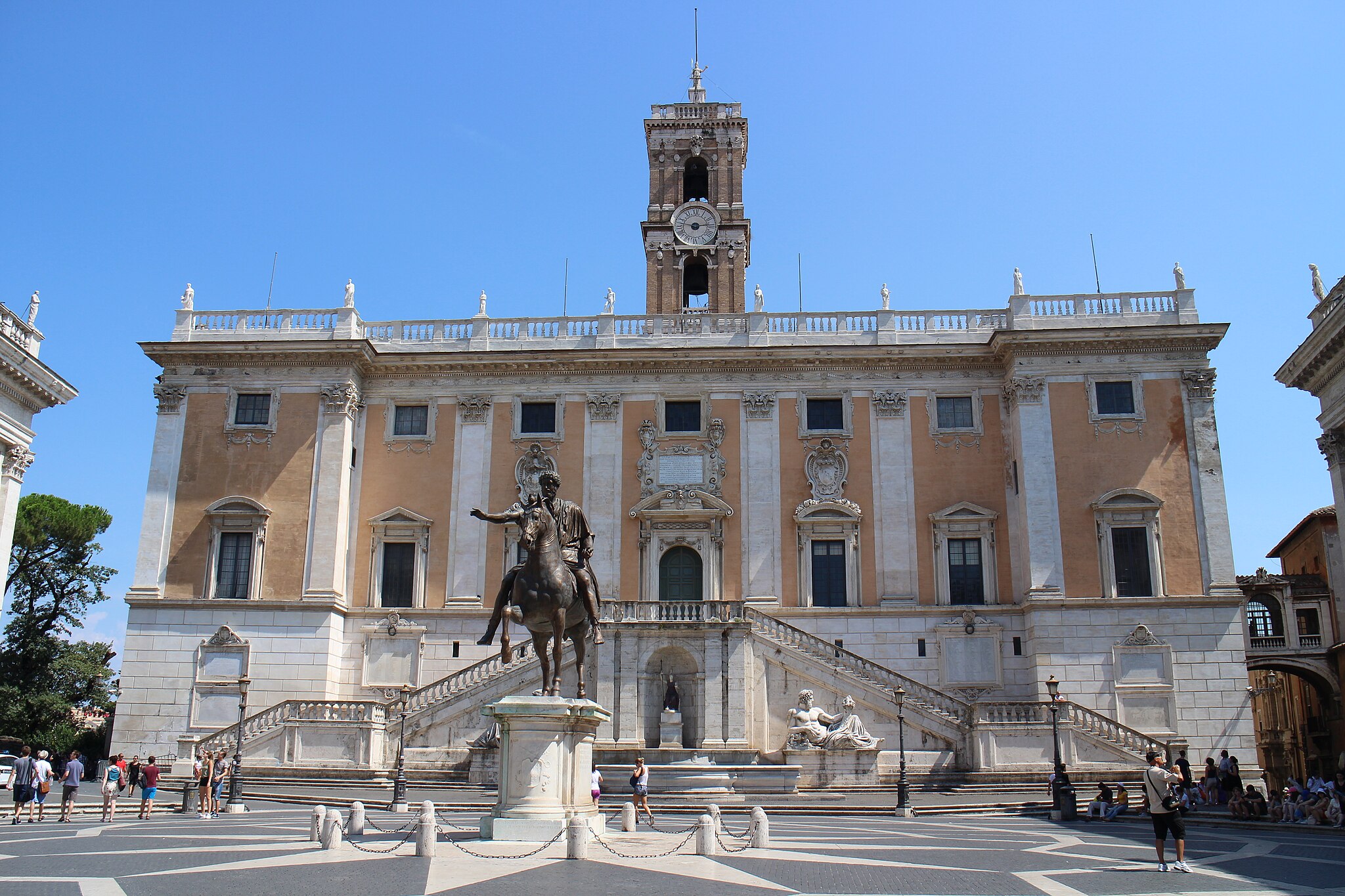
The Capitoline Museums, on Capitoline Hill just south of Piazza Venezia, are the oldest public museums in the world and hold one of the finest collections of ancient Roman sculpture in existence, including the original bronze equestrian statue of Marcus Aurelius. Advance booking is recommended.
Piazza Venezia is immediately to the south and is dominated by the vast white marble Altare della Patria (also known as the Vittoriano), the monument to King Vittorio Emanuele II completed in 1925. The glass elevator to the top of the structure offers 360-degree views over Rome. Entry to the monument itself is free; the elevator is ticketed.
Campo de' Fiori is around 15 minutes on foot south-west, via the atmospheric streets of the historic centre. The square hosts a morning market of fruit, vegetables, flowers, and street food every day except Sunday. The surrounding neighbourhood has some of the better restaurants and wine bars in central Rome, away from the main tourist axis.
The Area Sacra di Largo Argentina is around 10 minutes on foot and contains the ruins of four Republican-era Roman temples, some of the oldest in the city. Julius Caesar was assassinated nearby on the Ides of March, 44 BC. The archaeological area is free to view from the surrounding walkways, and a small museum has recently opened on site.
The Gesù, the mother church of the Jesuit order, is a short walk from the gallery on Piazza del Gesù. The interior is one of the finest examples of Roman Baroque church decoration anywhere, with the ceiling fresco of the Triumph of the Name of Jesus by Giovanni Battista Gaulli occupying the entire nave vault. Entry is free.
Rules, Bags, and Security
No cloakroom: There is no cloakroom at the Galleria Doria Pamphilj. Large bags, suitcases, and backpacks cannot be stored on site, so arrive without significant luggage if possible.
No lift: The gallery is on the first floor of the palace, accessed by stairs. There is no elevator. Visitors with mobility difficulties should be aware of this before booking.
Photography: Photography is generally permitted throughout the gallery without flash. Some specific areas may have restrictions; follow signage and the guidance of gallery staff.
Children: Children under 12 enter free. The gallery is not specifically oriented toward children, and the absence of interactive elements means it is best suited to older children with an interest in art and history. That said, the scale and opulence of the Hall of Mirrors tends to make an impression on visitors of all ages.
No re-entry: Tickets are valid for one entry on the booked date and time slot only.
Accessibility at Galleria Doria Pamphilj
Accessibility at the Galleria Doria Pamphilj is limited by the historic nature of the building. There is no lift, and the gallery is reached by stairs. The palace's 16th and 17th-century architecture means that full wheelchair access to all areas is not possible. Visitors with reduced mobility should contact the gallery directly before booking to understand which areas are accessible and to arrange any necessary assistance.
Final Tips for Visiting Galleria Doria Pamphilj
Book tickets in advance through the official gallery website. Entry is not guaranteed without a reservation, and this is strictly enforced.
Book only through the official website. The gallery explicitly warns that it does not guarantee or take responsibility for tickets purchased elsewhere, and may refuse entry for such tickets.
The gallery is closed every Wednesday. This is the most common and most frustrating way to miss your visit. Double-check your day before travelling.
The Roma Pass does not cover entry here. This gallery is privately managed and sits outside the Roma Pass circuit entirely.
Use the audio guide. It is included in your ticket and narrated by a family member. It transforms the visit from a walk through paintings into something much more personal and contextual.
There is no cloakroom and no lift. Travel light and be aware of the stairs before booking if you have mobility considerations.
Arrive early on weekdays. The gallery at 9:00am on a Monday or Tuesday morning is about as close to having great art to yourself as Rome can offer.
Tickets cannot be refunded or changed. Plan your visit carefully before completing your booking.
The Hall of Mirrors alone is worth the price of admission. It is one of the most spectacular interiors in Rome and receives a fraction of the attention of more famous rooms in the city.
Combine with the Pantheon for a natural half-day loop through the historic centre, finishing with a coffee at Sant'Eustachio il Caffè.
Back to Rome Attractions
Explore other Rome attractions
" width="24px"><path d="M 0 0 L 24 0 L 24 21.231 L 0 21.231 Z" fill="transparent" height="21.230768474975793px" id="nL2EwDcS9" width="24px"/><path d="M 0 0.541 C 0 0.242 0.245 0 0.547 0 L 2.735 0 C 3.037 0 3.282 0.242 3.282 0.541 L 3.282 4.598 C 3.282 4.897 3.037 5.139 2.735 5.139 L 0.547 5.139 C 0.245 5.139 0 4.897 0 4.598 Z" fill="rgb(196, 217, 201)" height="5.138657337892187px" id="hZ_rlBe_S" transform="translate(0 16.092)" width="3.2820512820512358px"/><path d="M 0 0.541 C 0 0.242 0.245 0 0.547 0 L 2.735 0 C 3.037 0 3.282 0.242 3.282 0.541 L 3.282 7.843 C 3.282 8.142 3.037 8.384 2.735 8.384 L 0.547 8.384 C 0.245 8.384 0 8.142 0 7.843 Z" fill="rgb(230, 211, 160)" height="8.38412513024521px" id="HgVBxIz3e" transform="translate(5.128 12.847)" width="3.282051282051235px"/><path d="M 0 0.541 C 0 0.242 0.245 0 0.547 0 L 2.735 0 C 3.037 0 3.282 0.242 3.282 0.541 L 3.282 12.982 C 3.282 13.281 3.037 13.523 2.735 13.523 L 0.547 13.523 C 0.245 13.523 0 13.281 0 12.982 Z" fill="rgb(232, 207, 164)" height="13.522782468137464px" id="utgrDnoM9" transform="translate(10.325 7.708)" width="3.282051282051377px"/><path d="M 0 0.541 C 0 0.242 0.245 0 0.547 0 L 2.735 0 C 3.037 0 3.282 0.242 3.282 0.541 L 3.282 16.498 C 3.282 16.797 3.037 17.039 2.735 17.039 L 0.547 17.039 C 0.245 17.039 0 16.797 0 16.498 Z" fill="rgb(233, 196, 166)" height="17.038705909853153px" id="OLOhW6STz" transform="translate(15.521 4.192)" width="3.2820512820512384px"/><path d="M 0 0.541 C 0 0.242 0.245 0 0.547 0 L 2.735 0 C 3.037 0 3.282 0.242 3.282 0.541 L 3.282 20.69 C 3.282 20.989 3.037 21.231 2.735 21.231 L 0.547 21.231 C 0.245 21.231 0 20.989 0 20.69 Z" fill="rgb(217, 170, 153)" height="21.230768474975793px" id="H5Z8wcwkd" transform="translate(20.718 0)" width="3.2820512820512278px"/></g></svg>)